At the beginning, there was real concern as to whether it would be possible to achieve the learning outcomes and publication outputs, especially because of the relative low qualification entry of the mentees. My experience as a university lecturer has taught me that early career researchers – especially graduate students at masters and even PhD level often struggle to publish their research results. But here was a case where almost all mentees lacked a university degree. A few had enrolled in undergraduate programmes and other online courses, but most were generally not conversant with research dynamics – having just completed their secondary level education. This concern proved irrelevant in the end given that two out my three mentees ended up publishing high quality papers from the research they conducted inside the camps.
Researcher
TrainingGROWING THE NEXT GENERATION OF RESEARCHERS
RVI supports early career researchers in Eastern and Central Africa through training, mentorship and research opportunities. We focus on hard-to-reach areas and underrepresented topics, helping to build stronger evidence, sharper context analysis and credible local voices in policy and practice.
20+
Trainings completed
100+
Participants
6
Masters scholarships
30
Publications
2
Acceptances
Our Approach

Training in methods,
ethics and writing
Our intensive trainings build core skills in research design, field methods, ethics and analytical writing, with a focus on producing publishable, policy-relevant work that can support future academic, policy or professional opportunities.

Mentorship, networking
and peer learning
We provide structured mentorship and sustained peer learning, creating supportive networks where participants refine their research, strengthen their analytical skills and build relationships that advance their academic or professional pathways.

Partnerships with universities
and research centres
We work with universities and research centres to expand access to expertise, supervision and collaborative opportunities that strengthen research quality and support academic, policy and career progression.

Building research communities
and networks
We develop long-term research communities that combine training, mentoring and knowledge exchange to improve research outputs and open pathways into academic, policy and professional spaces.
Testimonials
"
Dr. Fred Ikanda, Senior Lecturer, Maseno University, Kisumu, Kenya
"
The RCoP training really changed how I see myself in this work. Before, I felt like just someone from the community trying to do something small but through the training, I learned how to shape our lived experiences into research that can be heard and respected. It gave me confidence and practical tools that I’m now using in my ethnographic research with Aspire Institute, where I’m focusing on how young South Sudanese refugees are working for peace in Kakuma and Kalobeyei.The RCoP training also helped me grow as a writer. With that foundation, I submitted a proposal to Forced Migration Review, and I’ve now been invited to write a full article titled Coping with Climate Uncertainty: Refugee Choices in Kakuma and Kalobeyei Settlements.
Nyariel Nyakoat, Researcher, Aspire Institute, Kakuma refugee camp, Kenya
"
RCoP training has had an important impact on my professional development through enriching learning experiences, which guided me in the process of my application for a Masters Scholarship at the University of Turino, Italy, from the first stage to the final interview because I was told to submit the research proposal. One of the impacts was on how to analyze academic literature, which is really still relevant in my academic work, which has really supported my career progression in international cooperation, where I am always required to write two papers in every semester. I also gained knowledge and skills in coming up with researchable topics and developed a proposal, which is very important as part of my academic culture at the university of Turin. The training emphasized literature reviews in most of the discussion, and today all the general knowledge and skills obtained during training have really helped me to strengthen my overall academic and my professional competence.
Chaloma Kaunda, Masters in International Cooperation, University of Turino, Italy – Kakuma refugee camp, Kenya
"
The RCoP training has profoundly influenced my professional development by equipping me with essential skills in research methodologies and data analysis. Completing the course enabled me to write my first independent report, significantly boosting my confidence and igniting my passion for research. The insights gained have allowed me to produce similar work subsequently, enhancing my ability to contribute meaningfully to projects and discussions in my field. This training has been a pivotal step in my career, fostering my analytical skills and positioning me as a more effective researcher and collaborator within my team.
Farhia Mohamoud, Researcher, Somali Public Agenda (SPA), Somalia
"
The training enhanced my understanding of research methodologies and techniques in a big way, in the sense that it created a deep engagement with research methodologies and approaches. Soon after the RCoP training, I applied for another research project funded by the United States Institute for Peace (USIP) focusing on China-Africa relations, and my research product was highly commended by the experts. This year, I won the prestigious Chevening Scholarship to pursue a Masters in Geopolitics & International Affairs, at the University of Sussex, UK. I can’t wait to apply what I learnt from RCoP to my graduate studies.
Moustafa Mohamed, RCOP Alumni, Current engagement: MA student in Geopolitics & International Affairs, University of Sussex, UK
KEY INITIATIVES
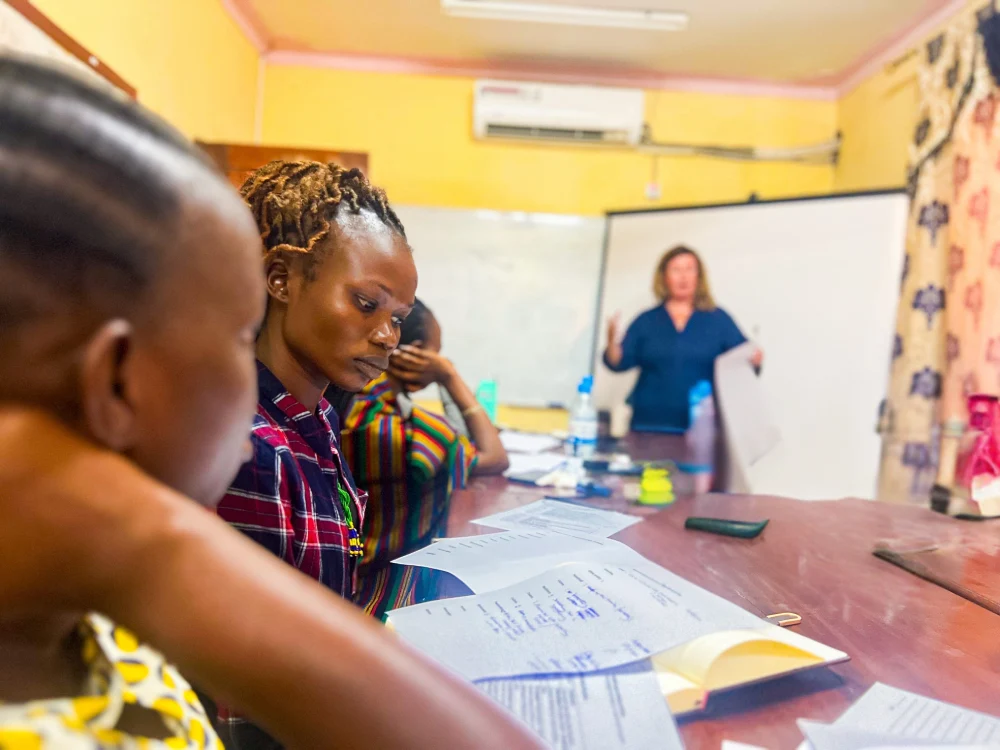
South Sudan Women’s Research Network (SSWRN)
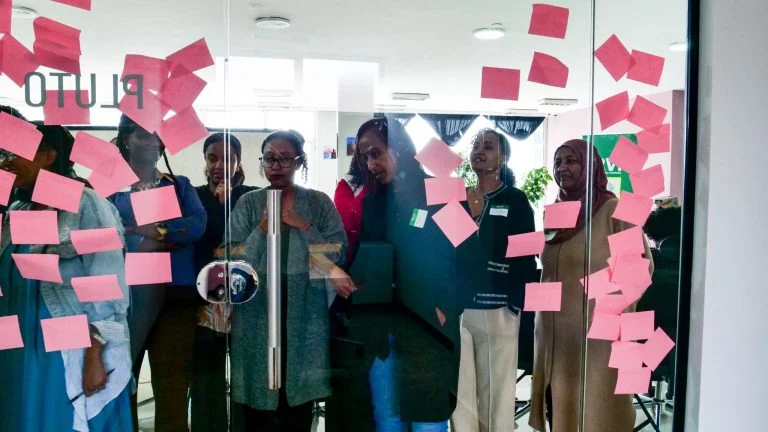
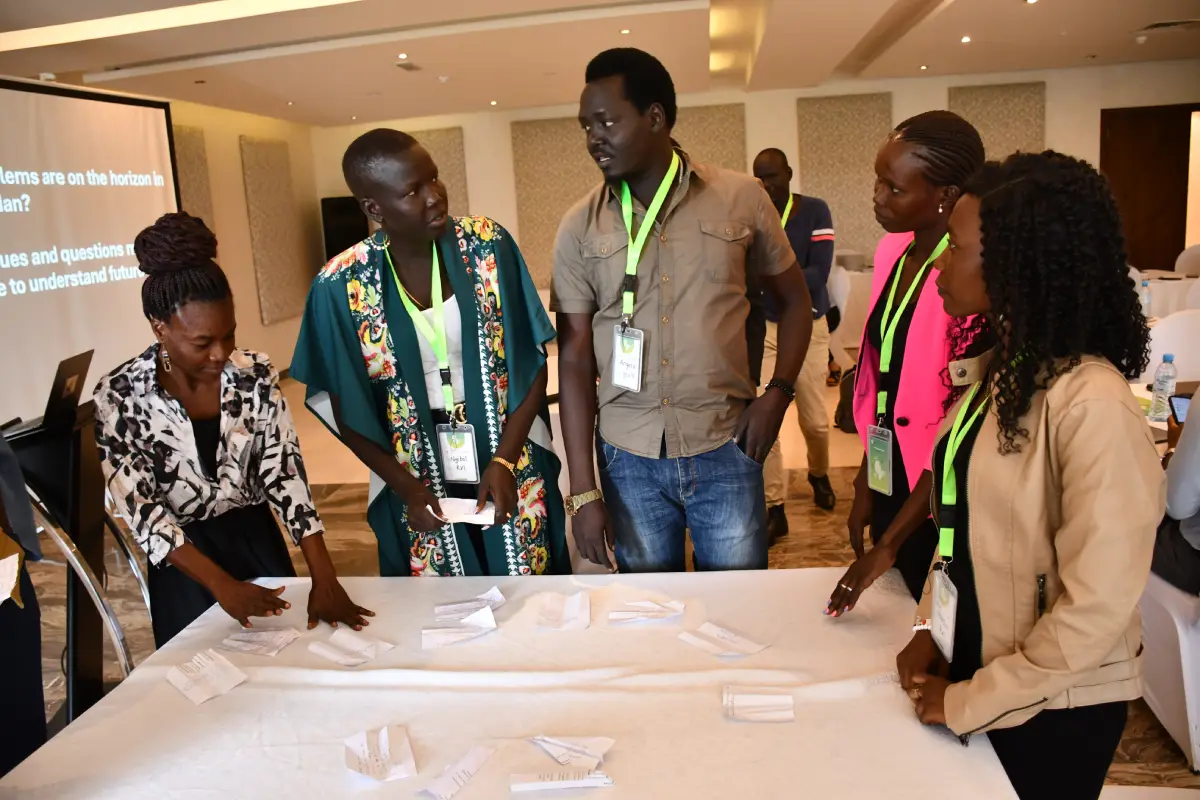
SSWRN strengthens local women’s voices in research, knowledge production and heritage preservation in South Sudan. The initiative provides training, mentoring and opportunities to develop evidence-based analysis on conflict dynamics, human rights and local governance.
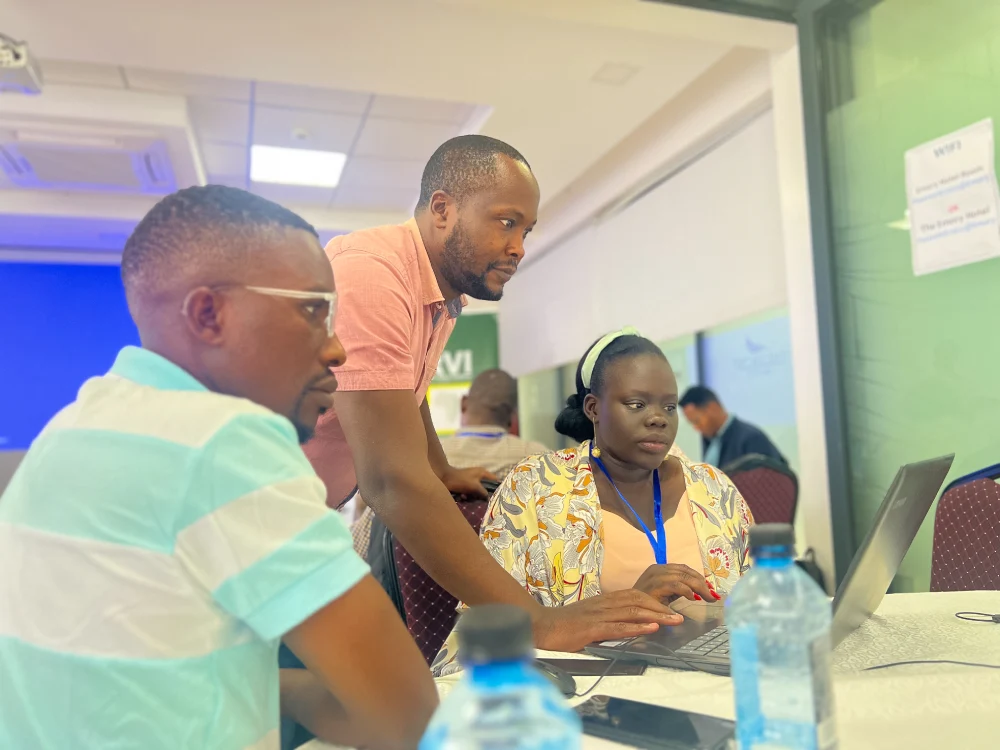
X-Border Local Research Network (LRN)
Part of the XCEPT project, the Local Research Network supports locally led research in conflict-affected border regions across Ethiopia, Kenya, Somalia, Sudan and South Sudan. The initiative adopts RVI’s approach to training and mentorship by pairing early-career researchers with senior counterparts and prioritizing local leadership in shaping research agendas, methods and dissemination.
For more information on our Researcher Training, please contact us.